


 Deutsch
 English
 Español
 Français
 Nederlands
 Português


 Share
Share




China's escalating export controls on rare earths and critical minerals between late 2025 and early 2026 have triggered sixfold price spikes and slashed European licensing approval rates below 25%, exposing a severe Western vulnerability that analysts describe as the most acute supply chain crisis of the year. With Beijing controlling roughly 90% of global rare earth processing, 80% of tungsten, and 60% of antimony, the United States-led FORGE alliance and over $30 billion in countermeasures face a narrow 12-to-18-month window to diversify supply chains before China's dominance becomes structurally irreversible.
Background: The Weaponization of Mineral Supply Chains
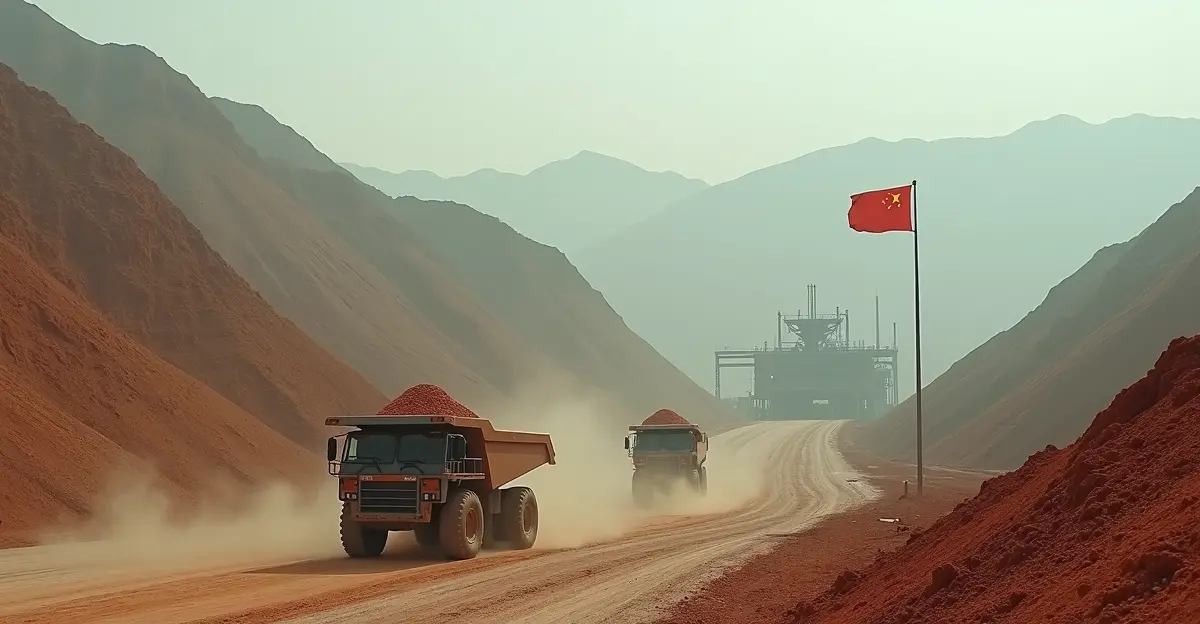
China's critical minerals dominance is not new—but its aggressive use of export controls as a geopolitical tool has escalated dramatically. In April 2025, Beijing placed seven medium and heavy rare earth elements—samarium, gadolinium, terbium, dysprosium, lutetium, scandium, and yttrium—along with all downstream neodymium-iron-boron (NdFeB) magnets containing them, under mandatory MOFCOM export licensing. This was followed by tightened controls on gallium, germanium, and antimony, citing national security concerns. The EU carbon border tax and other Western trade measures had already strained relations, but China's mineral controls struck at the heart of modern industrial economies.
According to a multi-institutional analysis drawing on data from the European Parliament, OECD, and CSIS, over 80% of European companies depend on Chinese supply chains for materials essential to defense, electric vehicles, and renewable energy. The report argues that China is weaponizing control—not scarcity—by employing temporary, reversible restrictions to maintain pricing power and extract strategic concessions while preventing large-scale Western alternative investment.
Price Spikes and Supply Disruptions
The impact has been immediate and severe. European dysprosium oxide prices surged 212% in early 2026, while praseodymium-neodymium oxide rose 27% in a single month. Antimony prices skyrocketed from $1,400 per metric ton in July 2024 to $38,000 by September 2024—a 2,600% increase—reaching up to $60,000 by mid-2025. Gallium spot prices jumped from approximately $240/kg to roughly $575/kg following export licensing requirements. Tungsten prices saw increases of 300-500%.
Impact on Defense and AI Hardware
The shortages are hitting critical sectors hardest. Neodymium and dysprosium are essential for permanent magnets used in electric vehicle motors, wind turbines, and advanced defense systems including missile guidance and radar. Gallium and germanium are crucial for semiconductors, infrared optics, and AI hardware. A 30% disruption in gallium supplies alone could cause a $600 billion reduction in U.S. economic output, according to FP Analytics. The 2025 economic crisis had already strained defense budgets, and now the Pentagon faces supply constraints for key weapons systems.
AI chip production is also threatened. Next-generation AI semiconductors require high-purity gallium and rare earth elements for advanced packaging and cooling systems. With China controlling 98% of global low-purity gallium production and 60% of germanium refining, the AI boom is colliding head-on with mineral supply bottlenecks.
The Western Response: FORGE and Project Vault
On February 4, 2026, the U.S. hosted the inaugural Critical Minerals Ministerial in Washington, D.C., with representatives from 54 countries and the European Commission. Secretary of State Marco Rubio announced the launch of the Forum on Resource Geostrategic Engagement (FORGE) as the successor to the Minerals Security Partnership, with South Korea as inaugural chair. The U.S. is mobilizing over $30 billion in support for critical mineral supply chain projects.
A centerpiece of this effort is Project Vault—a $10 billion Export-Import Bank loan to establish the U.S. Strategic Critical Minerals Reserve. This public-private partnership will store essential raw materials in secure facilities across the country, with participating OEMs including GE Vernova, Boeing, Western Digital, and Clarios. EXIM Chairman John Jovanovic called it a transformative approach to securing American manufacturing supply chains and enhancing national economic security.
FORGE aims to create a preferential trade-and-investment zone with coordinated price floors to counter adversarial market manipulation. The alliance now covers 21 bilateral framework agreements signed in five months, representing two-thirds of the global economy. However, analysts warn that these initiatives face significant headwinds. Artificial intelligence regulation debates in Washington have diverted attention, and the sheer scale of investment needed—estimated at $50-100 billion over 5-30 years—dwarfs current commitments.
The 12-to-18-Month Window
Multiple analyses converge on a stark timeline: Western nations have 12 to 18 months to act decisively before China's structural dominance becomes locked in for decades. Rebuilding independent Western supply chains would take 20 to 30 years of sustained investment, far exceeding the current geopolitical window. China is simultaneously investing in downstream processing and overseas mining assets, deepening its grip.
China's export control suspension on gallium, germanium, antimony, and superhard materials expires on November 27, 2026, creating a hard deadline. The core April 2025 MOFCOM Announcement No. 18 on rare earths remains fully enforced, with licensing taking 10-16 weeks. This regulatory uncertainty is paralyzing procurement decisions across Western industries.
Analysts identify three strategic pathways for the West: managed dependence (accepting Chinese dominance while stockpiling), costly independence (requiring massive investment), or a hybrid resilience model combining domestic processing for critical minerals like dysprosium and neodymium with recycling and strategic stockpiling. The hybrid approach appears most realistic in the near term.
Expert Perspectives
Haelim Anderson and Haotian Shi of the Andersen Institute note that China's power stems less from legal extraterritoriality and more from its physical dominance in mineral processing. The 2024 dual-use regulations grant China authority similar to the U.S. Foreign Direct Product Rule, extending jurisdiction over Chinese-origin items abroad. This creates a legal web that complicates Western diversification efforts.
The World Economic Forum's Global Risks Report 2026 ranks geoeconomic confrontation as the top global risk, underscoring the severity of the crisis. European Commission officials have acknowledged that the EU remains 100% dependent on China for heavy rare earths, with no near-term alternative in sight.
FAQ
What are critical minerals and why do they matter?
Critical minerals are raw materials essential for modern economies—particularly for energy, defense, and technology—whose supply is at risk due to limited availability or geopolitical factors. They include rare earth elements, gallium, germanium, antimony, tungsten, and others vital for EVs, wind turbines, semiconductors, and defense systems.
How much control does China have over critical mineral processing?
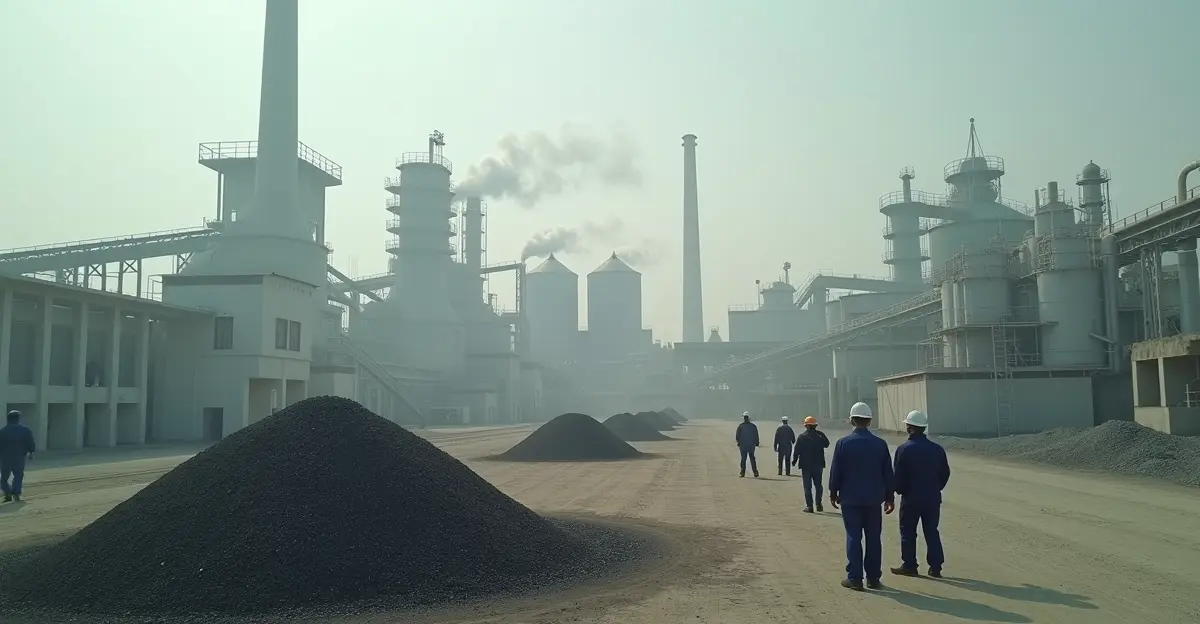
China controls approximately 90% of global rare earth processing, 80% of tungsten, 60% of antimony, 98% of low-purity gallium, and 60% of germanium refining. This dominance extends across mining, separation, and advanced material feedstock production.
What is the FORGE alliance?
The Forum on Resource Geostrategic Engagement (FORGE) is a U.S.-led plurilateral initiative launched in February 2026 as the successor to the Minerals Security Partnership. It includes 54 countries and aims to create a preferential trade-and-investment zone with coordinated price floors to counter Chinese market manipulation.
How long will it take to break China's monopoly?
Analysts estimate that rebuilding independent Western supply chains would take 20 to 30 years of sustained investment. However, the window to prevent China's dominance from becoming structurally irreversible is only 12 to 18 months.
What is Project Vault?
Project Vault is a $10 billion public-private initiative backed by the U.S. Export-Import Bank to establish a Strategic Critical Minerals Reserve. It will store essential raw materials in secure U.S. facilities to protect domestic manufacturers from supply shocks.
Conclusion: A Defining Test of Strategic Autonomy
China's critical minerals stranglehold represents the defining test of Western strategic autonomy in 2026. The combination of sixfold price spikes, collapsing licensing approvals, and a narrowing 12-to-18-month window demands urgent, coordinated action. While FORGE and Project Vault mark important first steps, the scale of investment and time required to rebuild independent supply chains dwarfs current efforts. The coming months will determine whether the West can break free from mineral dependency or accept a future of strategic vulnerability.



Follow Discussion